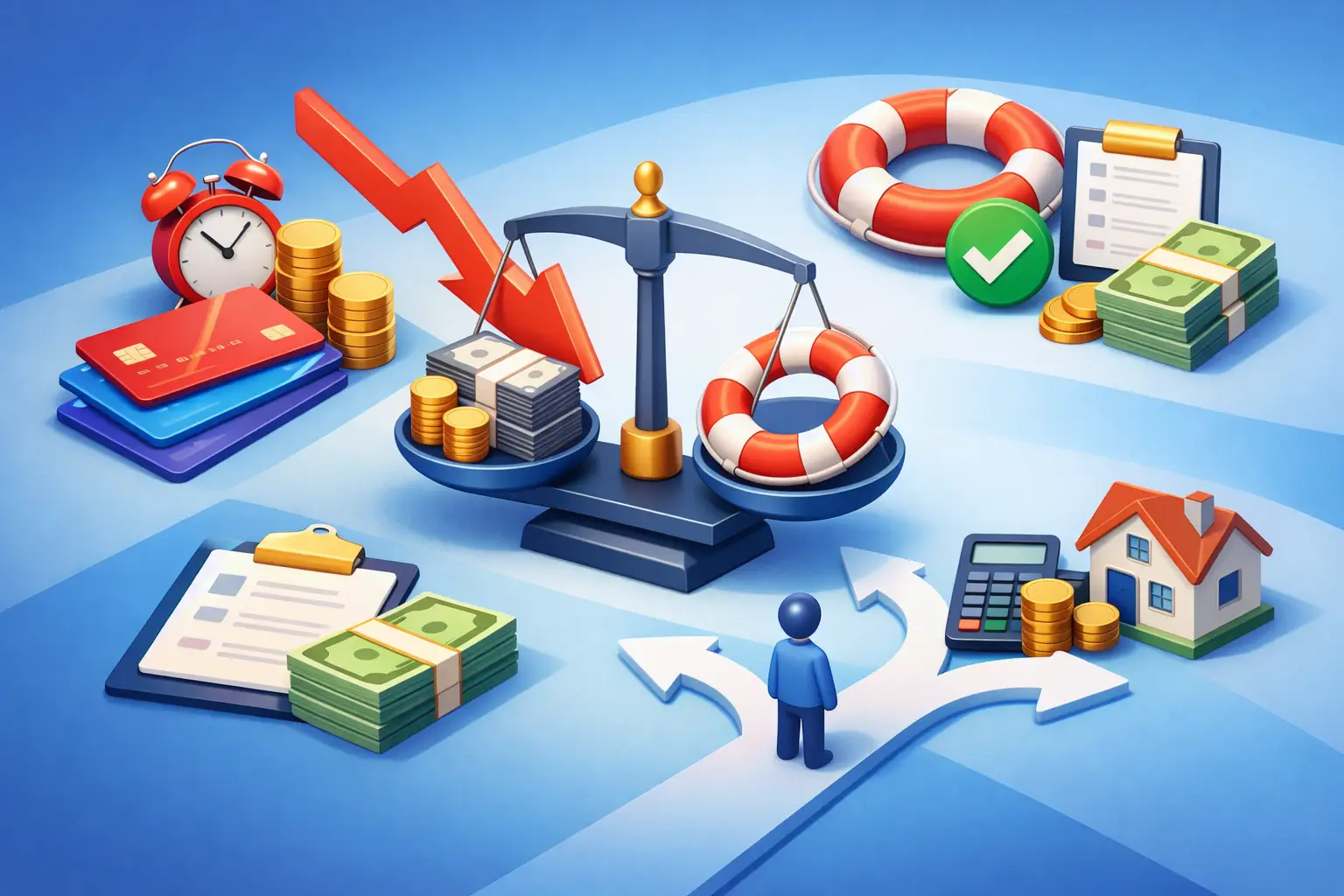
A credit card balance can feel manageable until the interest charge starts taking up money that could have gone toward the principal. If you are looking for high interest credit card debt help, the goal is not simply to find a lower payment. It is to choose a path that gives you a realistic payoff date, a payment you can sustain, and clear terms before you commit.
The right option depends on your credit profile, income, total debt, and whether you own a home with available equity. A solution that lowers your monthly payment but stretches the balance over many more years may cost more overall. Take a moment to compare the full picture before moving forward.
High Interest Credit Card Debt Help Starts With the Numbers
Start by pulling together each card's balance, annual percentage rate, minimum payment, and due date. Then add up your total monthly minimums. This tells you how much of your budget is already committed and how quickly the interest is working against you.
Look at your most recent statements, not just an app's displayed balance. Many cards calculate interest daily, and a promotional rate may be close to ending. If you have missed payments, account fees or a penalty APR may also be raising the cost of the debt.
Next, choose a monthly payoff amount you can make consistently after housing, utilities, food, insurance, transportation, and other essential expenses. Be honest here. A plan that requires perfect months is usually not a durable plan.
If you can pay more than the minimum, one approach is to direct the extra money to the card with the highest APR while continuing minimum payments on the others. This is often called the avalanche method. It generally reduces interest costs faster than paying off the smallest balance first, although clearing a smaller balance can sometimes provide motivation and free up cash flow. The best method is the one you will keep using.
Compare Your Main Debt Relief Options
There is no single answer for every household. These options solve different problems, and each comes with conditions worth reviewing carefully.
A focused payoff plan
A focused payoff plan may be enough if your income is stable and the balances are not growing. Stop adding new charges where possible, set automatic minimum payments to avoid late fees, and send every additional dollar to the selected card.
This option keeps you in control and does not require a new account or financing application. Its limitation is simple: if the APR is high and the balance is large, progress can be slow even when you are making meaningful payments.
A promotional balance transfer card
A balance transfer can provide temporary breathing room if you qualify for a card with a low or 0% introductory APR. The offer may allow you to pay down principal faster during the promotional period.
Read the terms closely. Balance transfers often include a fee, typically calculated as a percentage of the amount transferred. The promotional rate ends on a set date, and a missed payment can affect the offer. This option works best when you have a specific plan to eliminate the transferred balance before the regular rate begins.
A fixed-rate personal loan
A personal loan may combine several card balances into one monthly payment with a fixed term. If the loan rate is lower than the rates on your cards, and the repayment term is reasonable, it can make your payoff schedule easier to understand.
Approval, rates, fees, and loan amounts vary by lender and applicant. A lower payment is not automatically a better deal if it comes from extending the repayment period. Compare the total amount you would repay, including any origination fee, rather than looking only at the monthly payment.
A nonprofit debt management plan
A debt management plan through a reputable nonprofit credit counseling agency may help some consumers with unsecured credit card balances. The agency may work with participating creditors to seek lower interest rates or waived fees while you make one monthly program payment.
These programs can be useful when managing several accounts has become difficult. However, you may need to close enrolled credit cards, and not every creditor is required to participate. Ask about monthly fees, how long the plan is expected to last, and what happens if you miss a payment.
Home equity financing for homeowners
For eligible homeowners, a home equity line of credit, or HELOC, may offer a way to consolidate higher-interest credit card balances using available home equity. Because the financing is secured by your home, the rate may be lower than credit card APRs in some situations.
That potential savings comes with a serious trade-off: your home is collateral. Falling behind could put the property at risk. HELOCs can also have variable rates, meaning the payment and total borrowing cost may change over time. Closing costs, annual fees, draw periods, repayment terms, and lender requirements all matter.
A HELOC is generally more appropriate when you have sufficient equity, stable income, a clear repayment plan, and the discipline not to rebuild card balances after consolidation. It is not a quick fix for ongoing overspending or a budget shortfall that has not been addressed.
What to Compare Before You Apply
When you evaluate any consolidation or repayment option, compare the APR, fees, monthly payment, payoff term, and total repayment amount. Also ask whether the rate can change, whether there is a prepayment penalty, and what triggers a default.
For a HELOC, review the draw period and the repayment period separately. Payments can rise when the repayment period begins, particularly if earlier payments covered mostly interest. Ask the lender for examples showing how payments could change if rates increase.
Protect your credit and your personal information during the research stage. Some providers may offer a prequalification or matching process that does not require an initial hard credit inquiry, but final applications and lending decisions may involve a hard pull. Confirm exactly what type of credit check will occur and when.
Debt Relief Alliance can match qualifying homeowners with participating home equity financing partners based on high-level details. It is not a lender, bank, mortgage broker, or tax practitioner. A match is not an approval, and the lender determines eligibility, rates, terms, and final credit decisions. Nothing should move forward until you have reviewed the partner's offer and decided it works for you.
Avoid Debt Relief Offers That Create More Risk
Be cautious with any company that guarantees it can erase credit card debt, tells you to stop communicating with creditors without explaining the consequences, or demands substantial upfront fees before providing services. Debt settlement can reduce what some people repay, but it can also involve missed payments, collection activity, credit damage, fees, and possible tax consequences on forgiven debt.
Before enrolling in any program, ask how it is paid, whether creditors have agreed to the proposed arrangement, how long the process may take, and what could happen if negotiations do not succeed. Get material terms in writing. Pressure to sign immediately is a reason to pause.
If you are already behind, contact your card issuers directly as well. Some may have hardship programs, temporary rate adjustments, or payment arrangements. These are not guaranteed, but asking early can give you more choices than waiting until the account is severely delinquent.
A Simple Way to Move Forward
Choose one action for the next 48 hours: build a complete list of your card terms, call the issuer with the highest rate, or compare a consolidation option using total repayment cost. Small, specific steps are more useful than trying to solve every part of the debt at once.
High-interest debt becomes less overwhelming when each choice is tied to a number, a deadline, and a consequence you understand. Keep control of the process, ask direct questions, and only accept a payment plan that leaves room for real life.