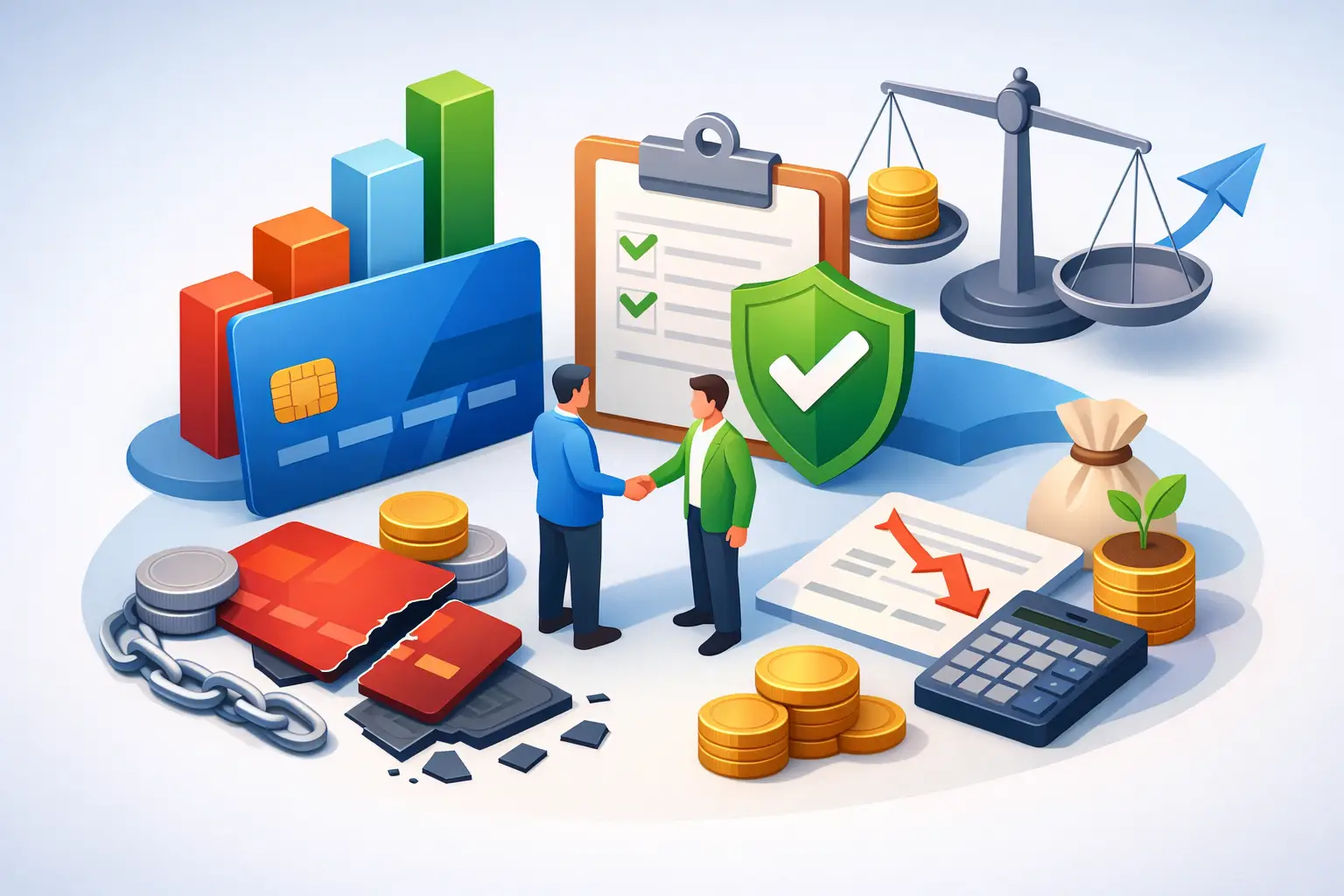
A search for a national debt relief program often starts with a stressful number: a credit card balance that will not shrink, an IRS notice, or monthly payments that no longer fit the budget. The phrase can sound like a single government-backed solution available to everyone. Usually, it is not. It is a broad marketing term that can describe several very different services, each with its own rules, costs, risks, and eligibility requirements.
The right next step depends on the type of debt you have, your income, whether you own a home, and how urgently you need relief. A legitimate option should make those distinctions clear before asking you to commit.
Is There One National Debt Relief Program?
There is no universal federal program that erases consumer debt for all Americans. Credit card balances, personal loans, medical bills, mortgage debt, and tax debt are handled under different laws and by different providers. A company using the phrase “national debt relief program” may be referring to debt settlement, debt consolidation financing, credit counseling, tax resolution, or a service that matches consumers with providers.
That does not make every offer misleading. It does mean the name alone tells you very little about what you are being offered.
For example, federal and state tax agencies may offer qualifying taxpayers installment agreements, offers in compromise, or penalty-abatement reviews. Those are tax-resolution paths, not consumer debt-consolidation programs. A lender may offer a personal loan or home equity line of credit to combine eligible balances. That is financing, not debt forgiveness. A debt-settlement company may negotiate with certain unsecured creditors for less than the full balance, but settlement can involve missed payments, fees, credit damage, and possible tax consequences.
The practical question is not, “Is this a national program?” It is, “What service is this, who provides it, and what happens to my debt if I enroll?”
Start With the Debt You Need to Address
A solution that fits tax debt may be wrong for revolving credit cards. Before sharing detailed financial information, sort your situation into the right category.
Credit cards, medical bills, and personal loans
Unsecured debts may be addressed through budgeting changes, a nonprofit credit-counseling plan, consolidation financing, or debt settlement. Each approach works differently.
Consolidation replaces multiple eligible balances with one new payment. The interest rate, repayment term, origination costs, and total amount repaid matter more than the convenience of having one bill. A lower monthly payment can still cost more overall if the term is much longer.
Debt management plans generally involve repaying the full principal through a structured plan, sometimes with reduced interest rates or waived fees from participating creditors. Debt settlement seeks a reduced payoff amount, typically after accounts have become delinquent or funds have accumulated for negotiations. It may be appropriate in limited cases, but it is not a quick fix and creditors do not have to agree.
IRS or state tax debt
Tax debt requires a separate conversation. The IRS and state tax authorities have collection powers that ordinary creditors generally do not, including liens, levies, and offsetting certain refunds. Ignoring notices can narrow your options.
A qualified tax professional can review whether you may qualify for a payment arrangement, penalty relief, temporary collection delay, or a settlement based on your financial circumstances. No legitimate provider can promise that the IRS will accept an offer in compromise or guarantee a specific reduction before reviewing your facts.
Debt secured by your home
Homeowners with available equity may consider a HELOC or another home-equity financing option for major expenses or balance consolidation. This can offer a different rate structure than unsecured borrowing, but the trade-off is serious: your home secures the financing.
A HELOC can be useful when the payment fits comfortably, the purpose is clear, and you understand that rates may be variable. It is not a casual way to move spending debt from one place to another. If the underlying spending pattern remains unchanged, the homeowner can end up with new credit card balances and a larger obligation tied to the property.
How a Legitimate Debt Relief Process Should Work
A credible provider should explain the process in plain language. You should know whether you are speaking with a lender, a debt-settlement company, a tax-resolution firm, a credit-counseling organization, or a matching service before you provide sensitive details.
A consumer-focused matching process generally begins with high-level questions about the debt type, amount, income, property ownership, and goals. That information helps determine whether a participating provider may be relevant. It should not be presented as an approval.
If you are matched with a lending partner, the lender makes the credit decision and provides the actual rate, repayment terms, fees, and disclosures. Some services can check for possible options without an initial hard credit inquiry, but a lender may require a hard inquiry later if you choose to proceed with a formal application. Ask when that could happen rather than assuming every step has no credit impact.
For tax relief, a professional should first evaluate your filing status, notices, balances, assets, income, and ability to pay. The review matters because tax agencies base many decisions on documentation, not on a consumer's stated hardship alone.
Nothing should move forward without your authorization. You should have time to review the agreement, ask questions, and decide whether the proposed path fits your budget.
Questions to Ask Before You Enroll
The strongest protection against a bad fit is asking direct questions early. A reputable provider should answer them without pressure.
Ask what exact service is being offered and whether the company itself provides it or connects you with a third party. Confirm all fees, when they are charged, and whether they are refundable. For loans and lines of credit, ask about the annual percentage rate, variable-rate terms, closing costs, prepayment terms, monthly payment, and total repayment amount.
For debt settlement, ask what happens if creditors refuse to settle, whether you will be asked to stop paying accounts, how your credit may be affected, and whether forgiven debt could be taxable. Ask whether lawsuits, collection calls, or interest and late fees may continue while the program is underway.
For tax services, ask which federal or state resolution strategies are realistically available, what documentation will be needed, and whether the provider is authorized to represent taxpayers before the applicable agency. Be cautious of claims that every taxpayer qualifies for a dramatic settlement.
Also ask how your information will be used. If you are working with a matching platform, it should disclose that it is not the lender or tax practitioner and explain that it may be compensated by participating partners when a request meets their guidelines.
Warning Signs Worth Taking Seriously
Relief is possible, but urgency can make people overlook warning signs. Step back if a company promises to eliminate debt, guarantees government approval, or says it can stop all collection activity immediately. Legitimate providers cannot control a creditor's decision or rewrite the rules of a tax agency.
Be equally careful with vague pricing, unexplained enrollment fees, pressure to sign the same day, and requests for payment before you understand the service. A polished ad is not proof that the option is right for your finances.
You should also be wary of anyone telling you not to open IRS or state notices, not to speak with your lender, or not to read a contract. Good guidance gives you more clarity and control, not less.
When Comparison Is More Useful Than a Quick Yes
People under financial pressure often want one answer immediately. But comparing relevant options can prevent a costly mismatch. A homeowner may find that a HELOC is not appropriate because the payment or variable-rate risk is too high. Someone with tax debt may learn that a payment plan is more realistic than a settlement request. A consumer with unsecured balances may decide that a debt-management plan is less damaging than settlement.
That is why separating financing from tax resolution matters. The goal is not to force every debt problem into one product. It is to identify the category of help you need, compare qualified options, and understand the terms before your credit, property, or tax status is affected.
If you choose to seek a match through a service such as Debt Relief Alliance, treat it as a starting point for comparison, not a final approval. Provide accurate high-level details, review any partner's disclosures carefully, and keep control of the decision. The best debt-relief path is the one you understand well enough to say yes to for the right reasons.