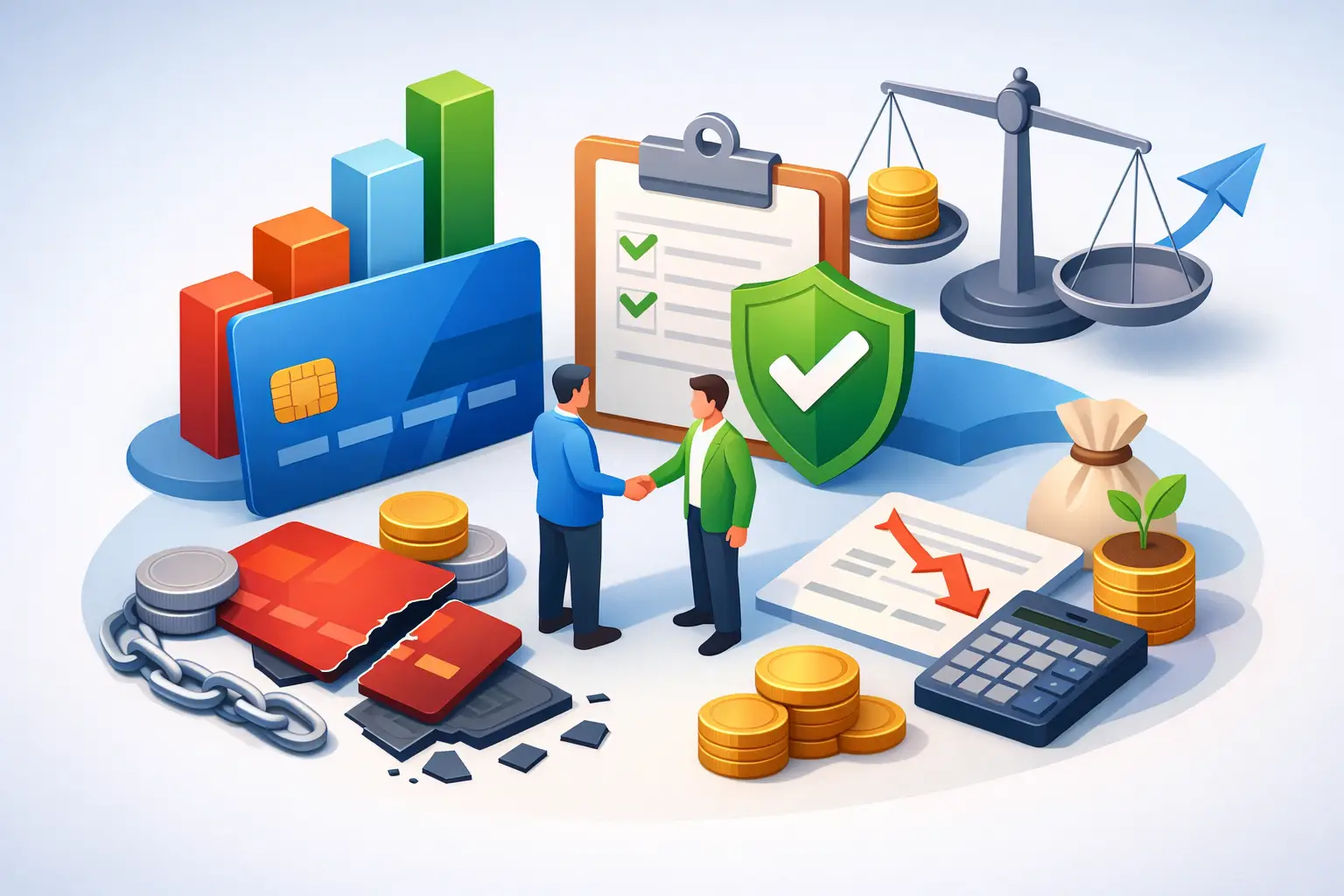
A debt relief program is not one single product, and that distinction can save you time, money, and unnecessary pressure. The right path depends on what you owe, who you owe it to, your income, your credit profile, and whether you own a home. A credit card balance, an IRS bill, and a mortgage-backed borrowing option require very different conversations.
The goal is not to accept the first offer that appears. It is to understand which type of help fits your situation, what it may cost, and what you give up in return. Nothing should move forward until you have reviewed the terms and decided the option makes sense for you.
What Does a Debt Relief Program Actually Mean?
The phrase "debt relief" is often used broadly. In practice, it can describe debt consolidation financing, debt settlement services, credit counseling, tax resolution, or a payment arrangement negotiated with a creditor or government agency. These options are not interchangeable.
Debt consolidation generally means using a new loan, line of credit, or home equity product to pay off existing balances. You still repay the debt, but ideally with a payment structure, rate, or timeline that is more manageable. Approval, interest rate, and loan amount depend on the lender's review of your credit, income, debts, assets, and other underwriting factors.
Tax relief is different. It refers to help addressing unpaid federal or state taxes through options such as installment agreements, penalty-abatement requests, or, in limited cases, settlement programs. A qualified tax professional can review your tax situation and discuss which resolution options may be available. No legitimate provider can promise that the IRS or a state agency will accept a particular outcome.
Debt settlement is another separate category. A settlement company may attempt to negotiate with creditors for less than the full balance owed. This can carry serious trade-offs, including damaged credit, collection activity, possible lawsuits, fees, and potential tax consequences when debt is forgiven. It may be appropriate in some circumstances, but it should not be treated like a consolidation loan.
Start With the Debt You Need to Address
Before comparing providers, write down the basics: the balance, interest rate, required payment, account status, and creditor for each debt. Include tax debt separately from consumer debt. This simple step makes it easier to avoid being routed toward a solution that does not address your actual problem.
If you have high-interest credit cards and stable income, consolidation may be worth exploring. A lower rate or longer repayment term could reduce your monthly payment, although a longer term can increase the total interest paid. If your income has changed or you are behind on payments, settlement, nonprofit credit counseling, or direct hardship arrangements with creditors may be more relevant.
If the balance is owed to the IRS or a state taxing authority, focus on tax resolution rather than consumer lending. A personal loan usually does not solve the underlying filing, compliance, penalty, or collection issues associated with tax debt. In many cases, staying current on required tax filings is a key part of qualifying for a resolution option.
When Home Equity May Be Part of the Conversation
Homeowners with available equity may be able to consider a home equity line of credit, commonly called a HELOC, or another home equity financing option. Funds may be used for renovations, major expenses, investments, or consolidating higher-interest balances, subject to lender guidelines.
This option can be useful when the rate and repayment structure compare favorably with unsecured debt. But it adds a major trade-off: your home is used as collateral. If you cannot meet the repayment terms, you could put your property at risk. Some home equity products also have variable interest rates, which means the payment can change over time.
Compare the full picture, not just the introductory payment. Ask about the interest rate, whether it can adjust, draw and repayment periods, closing costs, annual fees, prepayment terms, and how a new lien may affect future refinancing or selling plans. A lower payment today is only helpful if it remains affordable under realistic conditions.
How to Compare a Debt Relief Program Without Pressure
A useful comparison process starts with fit, not a sales pitch. You should know what category of assistance you are considering before providing extensive financial details or authorizing a credit inquiry.
A matching service can help streamline that first step. Debt Relief Alliance connects consumers with participating third-party professionals based on the type of request submitted, such as home equity financing or tax-resolution assistance. The platform is not a lender, bank, mortgage broker, or tax practitioner. Participating partners may compensate it when a consumer request meets their guidelines, while the consumer can decide whether to speak with a matched provider or proceed.
For an initial matching request, ask whether checking options requires a hard credit inquiry. Many services can assess general fit without one, but a lender may perform a hard inquiry later if you choose to apply. Final approval, rates, loan amounts, and terms always come from the lender or provider reviewing your complete information.
You should also ask who will contact you, what information is being shared, and whether you are under any obligation. A clear process gives you control over the next step. If a provider cannot plainly explain its role, pricing, or the consequences of its recommended option, pause before agreeing to anything.
Questions Worth Asking Before You Commit
A provider should be able to answer direct questions in plain language. For consolidation or home equity financing, ask what your estimated payment could be, whether the rate is fixed or variable, how long repayment lasts, and what fees apply. Also ask whether the proposed payment reflects a full review or only a preliminary estimate.
For tax help, ask whether the professional will review your returns, outstanding balances, notices, and current filing status before recommending a strategy. Clarify the scope of representation, what services are included in the fee, and whether additional costs may apply if your case becomes more complex.
For debt settlement, ask what happens if creditors refuse to negotiate, whether you will be advised to stop paying accounts, and how fees are calculated. Understand the possible impact on your credit report and whether forgiven balances could create taxable income. These are not minor details. They are central to the decision.
Be cautious with guarantees. Claims that you can erase debt quickly, qualify regardless of your circumstances, or stop all collections immediately should be examined closely. Financial outcomes depend on your records, your creditors, program rules, and the terms you ultimately accept.
A Better Next Step Is an Informed One
Debt can create urgency, especially when calls, notices, or rising payments start to pile up. Urgency does not require a rushed decision. Gather your account details, separate consumer debt from tax debt, and compare options that match the problem you actually need to solve.
The best next step may be a consolidation conversation, a review of available home equity, a tax-resolution consultation, or a direct payment arrangement. What matters is having clear terms, realistic expectations, and the freedom to say no when an option does not fit your budget or goals.